Collecting
9 min read
A Collector’s Guide to Landscape-Led Homes
Mara Voss

Collecting
9 min read
Mara Voss
FILED BY
KAVRA FIELD NOTES / ARCHITECTURE, DESTINATIONS AND THE ART OF INHABITING.
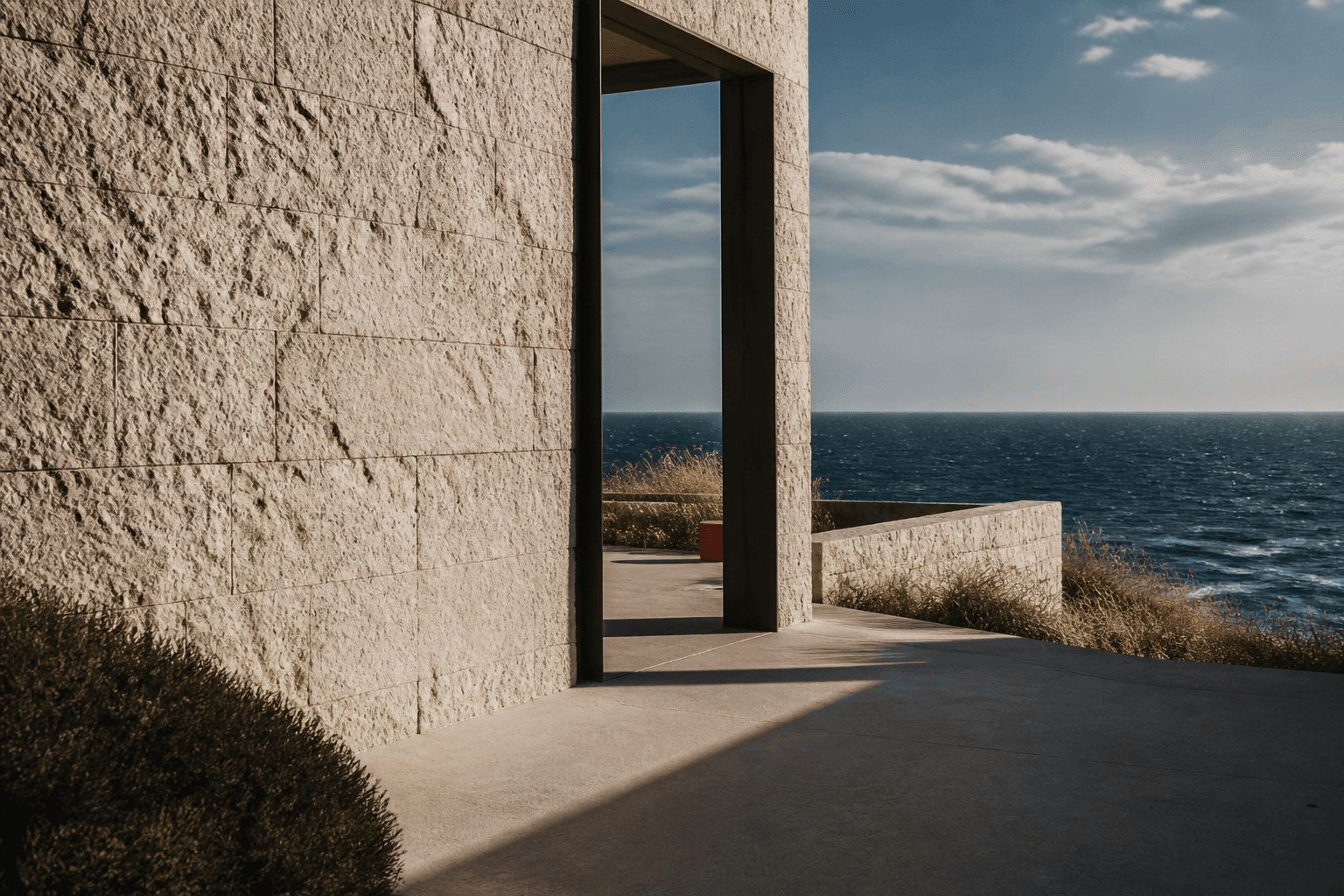
A landscape-led home should be evaluated from the ground outward. Begin with water movement, wind exposure, soil, vegetation, access and the seasonal path of the sun. These factors reveal where building is sensible and where the site should remain untouched. A spectacular viewpoint alone is not enough if reaching it requires excessive roads, retaining walls or ecological disturbance.
Placement changes how a property is lived. A house below a ridge may be protected and nearly invisible; one on the crest may command the horizon but feel exposed. Existing trees can provide scale and microclimate. Landforms can create privacy more convincingly than gates. The most valuable decision is often choosing the precise area not to build.
Collectors should ask how ownership will improve the land over time. Is there a plan for native habitat, water resilience and fire or erosion management? Can agricultural or conservation work continue alongside residence? Are buildings adaptable enough to avoid future expansion into sensitive ground? These questions belong in due diligence, not in an optional sustainability appendix.
Architecture shaped by landscape may be quieter in photographs, but its value deepens through use. It offers shade where it is needed, paths that reveal distance gradually and rooms that feel inseparable from weather. The house becomes one instrument within a larger territory — an asset whose quality depends on continued care of everything beyond its walls.

FIELD IMAGE / MATERIAL, LIGHT AND CONTEXT
VIEW / 02
WORDS AND FIELD RESEARCH
CONTINUE READING