Architecture
7 min read
The New Grammar of Seaside Houses
Mara Voss
Architecture
7 min read
Mara Voss
FILED BY
KAVRA FIELD NOTES / ARCHITECTURE, DESTINATIONS AND THE ART OF INHABITING.
For decades, the dominant coastal gesture was the uninterrupted panorama: more glass, fewer walls, every room facing the same horizon. The image was powerful, but it often treated the site as scenery. A house on the water must also negotiate glare, salt, wind direction, humidity and long periods when outdoor life is impossible. The most convincing new projects begin with those conditions.
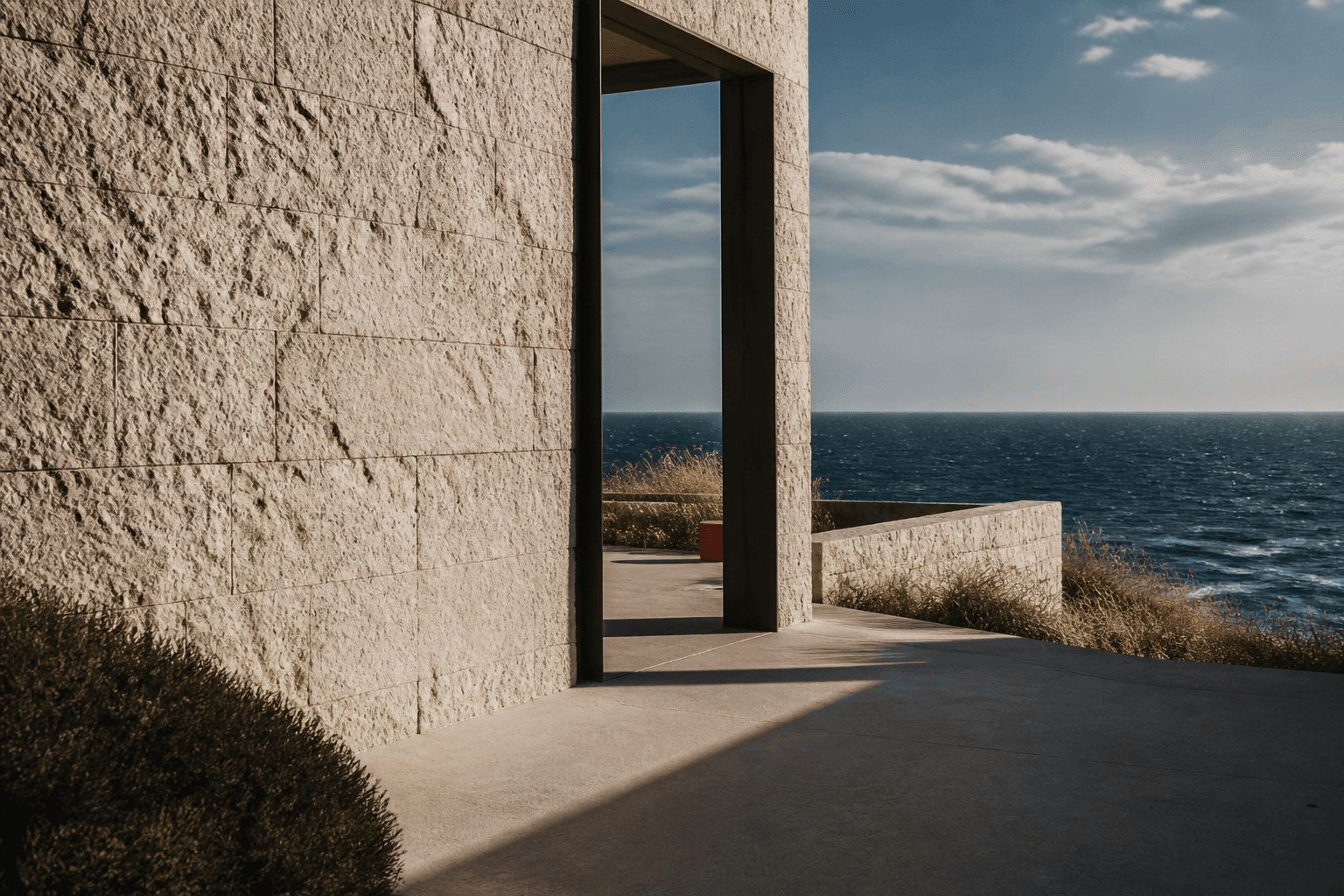
Instead of one continuous façade, architects are using courts, deep apertures and sheltered passages. The sea arrives in fragments — a reflected blue ceiling, a strip of horizon at the end of a corridor, the sound of waves in a protected garden. These edits create anticipation and give the view different intensity throughout the day.
Coastal material palettes are also becoming less decorative and more durable. Lime plaster can be renewed rather than replaced. Dense stone and mineral floors tolerate sand. Timber screens accept silvering, and metal is selected for the way it will patinate. Details are judged not at handover, but after a decade of weather.
This is a quieter kind of luxury. It places shaded outdoor rooms above oversized glazing, simple maintenance above fragile perfection and water systems above theatrical pools. The result is not anti-spectacle; it is a different spectacle, revealed slowly through temperature, shadow and the changing edge between land and sea.

FIELD IMAGE / MATERIAL, LIGHT AND CONTEXT
VIEW / 02
WORDS AND FIELD RESEARCH
CONTINUE READING

