Architecture
6 min read
The Return of the Urban Courtyard
Jonah Vale
Architecture
6 min read
Jonah Vale
FILED BY
KAVRA FIELD NOTES / ARCHITECTURE, DESTINATIONS AND THE ART OF INHABITING.
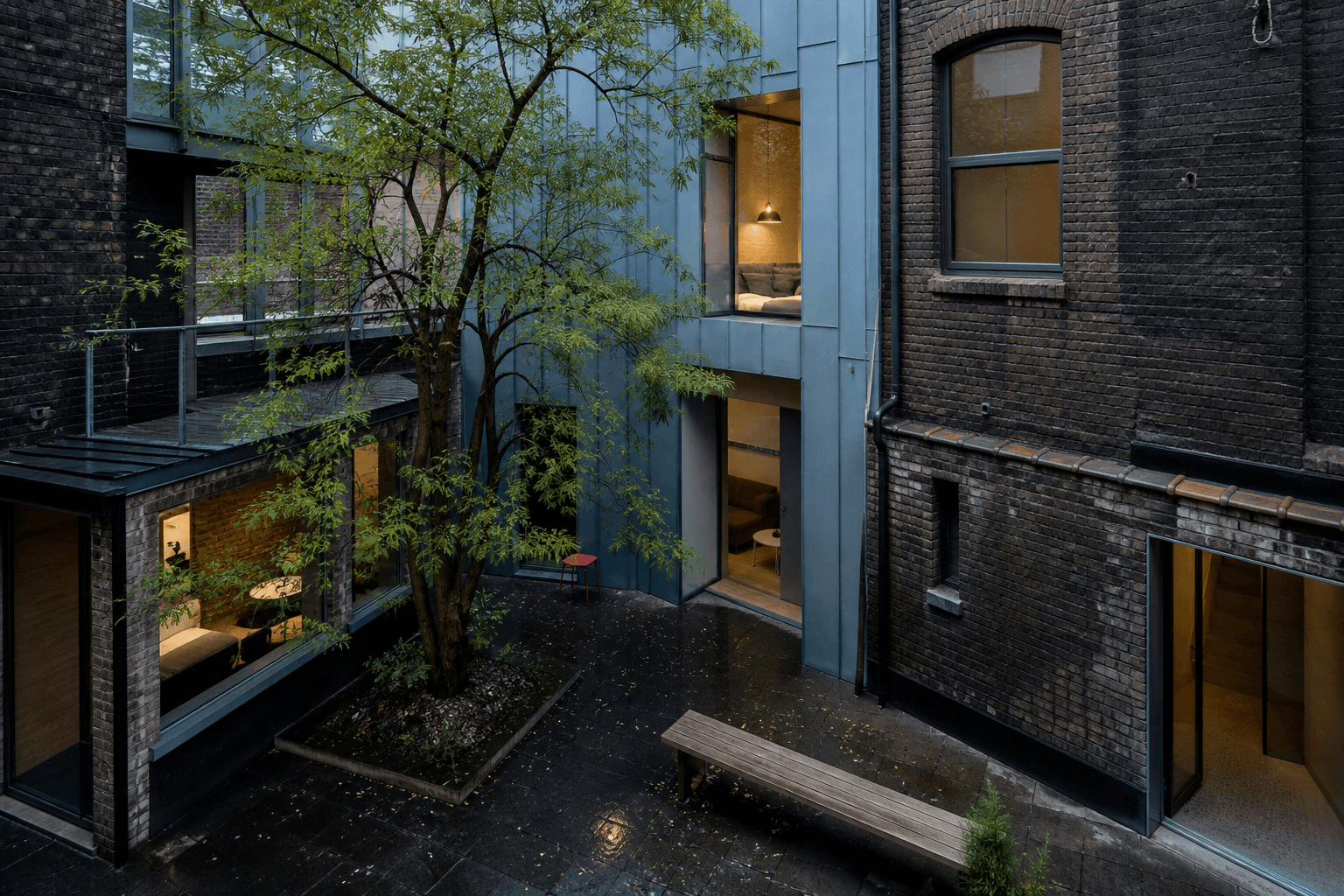
In a dense block, a courtyard can provide daylight, ventilation, privacy and social space at once. Its power comes from adjacency. Rooms that might otherwise face a street or neighboring wall can turn toward a protected exterior center, sharing weather without surrendering domestic life to public view.
Contemporary examples vary widely in size. Some are planted gardens large enough for a tree; others are narrow light wells with a bench and a single climbing plant. Success depends less on area than on proportion, surface reflectance and the number of rooms that participate. A small court connected to kitchen, stair and study can influence the entire house.
Courtyards also organize movement. Circulation can wrap around them, allowing family members to sense one another across the open space without occupying the same room. Sliding doors expand daily rituals outward, while upper-level windows bring borrowed light deep into the plan.
The best urban courts avoid becoming miniature show gardens. They use durable paving, purposeful shade and planting suited to limited soil and sun. Rain sounds different there; dinner can move outside; a bedroom gains a private horizon measured in meters rather than kilometers. In the city, that contained fragment of sky can be the most generous room in the house.

FIELD IMAGE / MATERIAL, LIGHT AND CONTEXT
VIEW / 02
WORDS AND FIELD RESEARCH
CONTINUE READING